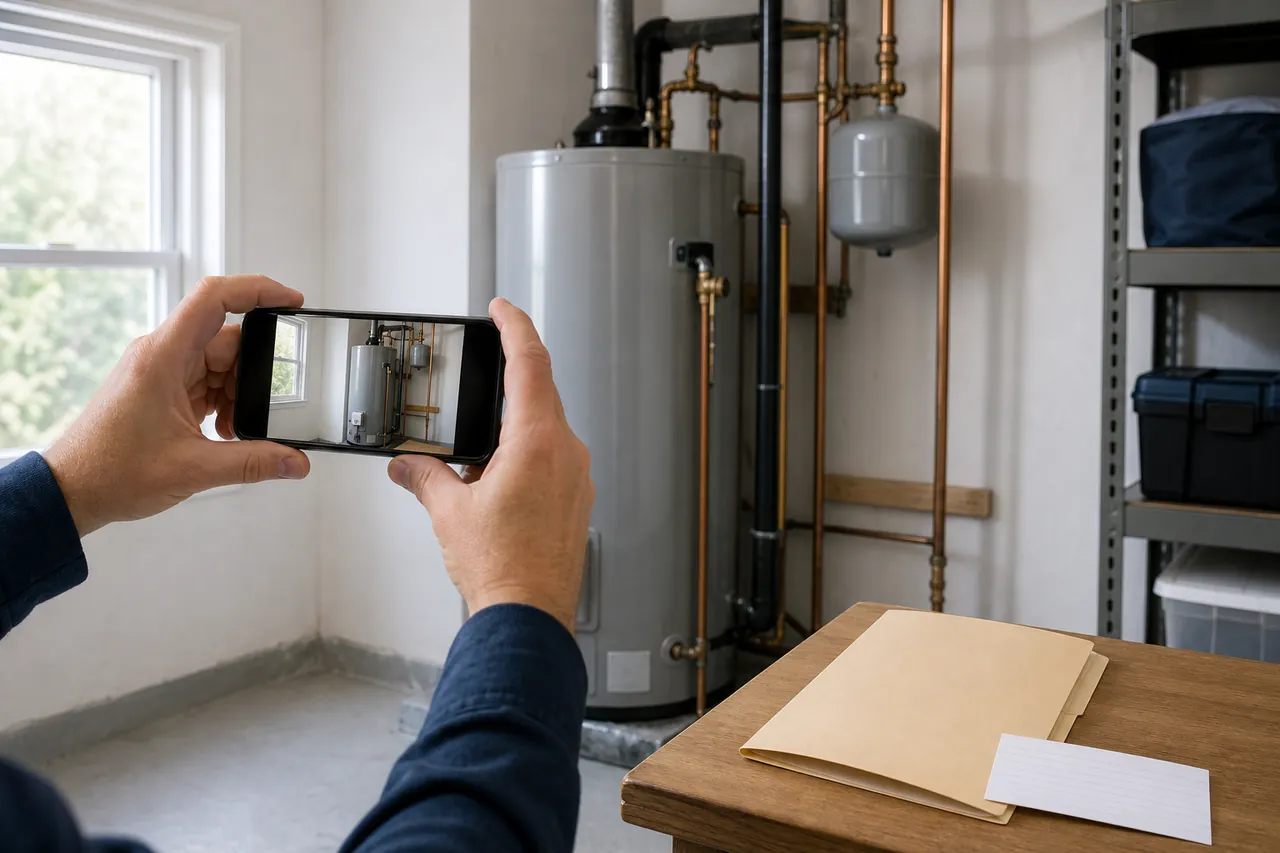
Water-heater information is easy to overlook until hot-water service changes or a plumber needs to discuss maintenance, repair, or replacement. A clear record identifies the actual appliance, its energy source, location, controls, and known history. It does not require opening panels or interpreting technical specifications beyond what appears on accessible labels and project documents.
Record the Unit’s Identity
From a safe standing position, photograph the manufacturer label, model number, and serial number if they are visible without removing a cover. Take one wider picture of the entire unit and surrounding area so the close label image can be matched to the correct appliance. In a property with multiple heaters, name each by location and the fixtures or area it serves.
Note whether the unit is described in existing documents as electric, gas, heat-pump, tankless, or another configuration. Do not guess based on appearance. Keep installation paperwork, permits supplied to the owner, and prior invoices with the same location label. Dates on those records are more reliable than an estimate made from memory.
Note Owner-Facing Controls and Connections
Document ordinary controls and displays exactly as they appear, including an alert code, current mode, or visible indicator. Avoid changing settings while collecting the record. Photograph accessible valves, piping connections, drainage arrangements, vents, or electrical disconnects only from outside the service area and without touching them.
Record the location of the appliance, normal access route, nearby stored items, and any finished surfaces that may affect service. Do not move heavy storage, operate unfamiliar valves, open electrical covers, or enter a confined space. Tell the plumber about those limitations before the visit so access can be planned responsibly.
Keep a Hot-Water Symptom History
When service is needed, describe the household experience: no hot water, reduced quantity, changing temperature, unusual sound, visible water, odor, or a display message. Include the fixtures affected, time of day, frequency, and whether ordinary household demand changed. Do not repeatedly run hot water, reset equipment, or recreate a leak for the sake of documentation.
If water appears unusually hot, the unit leaks, combustion concerns are visible, or an electrical condition seems unsafe, keep people away and seek appropriate assistance. A record supports service but never takes priority over immediate safety.
Build a Continuing Property File
Add service dates, work descriptions, changed components, and final handoff notes after each visit. Preserve earlier records as history while marking which model information is current. Store product manuals and owner-facing care instructions with the appliance entry, not in an unlabeled household folder.
Include the household’s ordinary hot-water usage pattern in service notes when a concern appears. The number of people using hot water, simultaneous appliance use, and the fixtures involved can help describe demand without asking anyone to repeat an uncomfortable or unsafe condition.
Review the file after a control change, plumbing renovation, or replacement. Accurate water-heater information helps a plumber arrive prepared and discuss the correct unit. It also helps the household separate confirmed equipment facts from symptoms that still require on-site evaluation, without relying on an uncertain age estimate or a similar model found online.