A plumbing project handoff should leave the household with more than a verbal statement that the work is finished. The final record needs to identify what was completed, what changed during the project, how affected fixtures or equipment should be used, and which conditions remain outside the scope. Preparing for that handoff before the last day makes missing information easier to catch.
Assemble the Final Scope and Changes
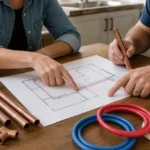
Keep the accepted proposal or work description with every approved revision in date order. The documents should identify work locations, fixtures, equipment, piping sections, access, protection, testing, and restoration responsibilities that applied. Mark superseded versions so the final agreement is easy to follow.
Ask for an explanation of any field change that is visible in the completed result but not clear in the paperwork. A short note identifying the discovered condition, decision, and approved response is more useful than relying on memory. Keep unrelated recommendations in a separate future-planning section.
Record Products and Locations
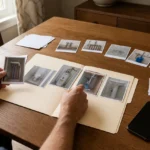
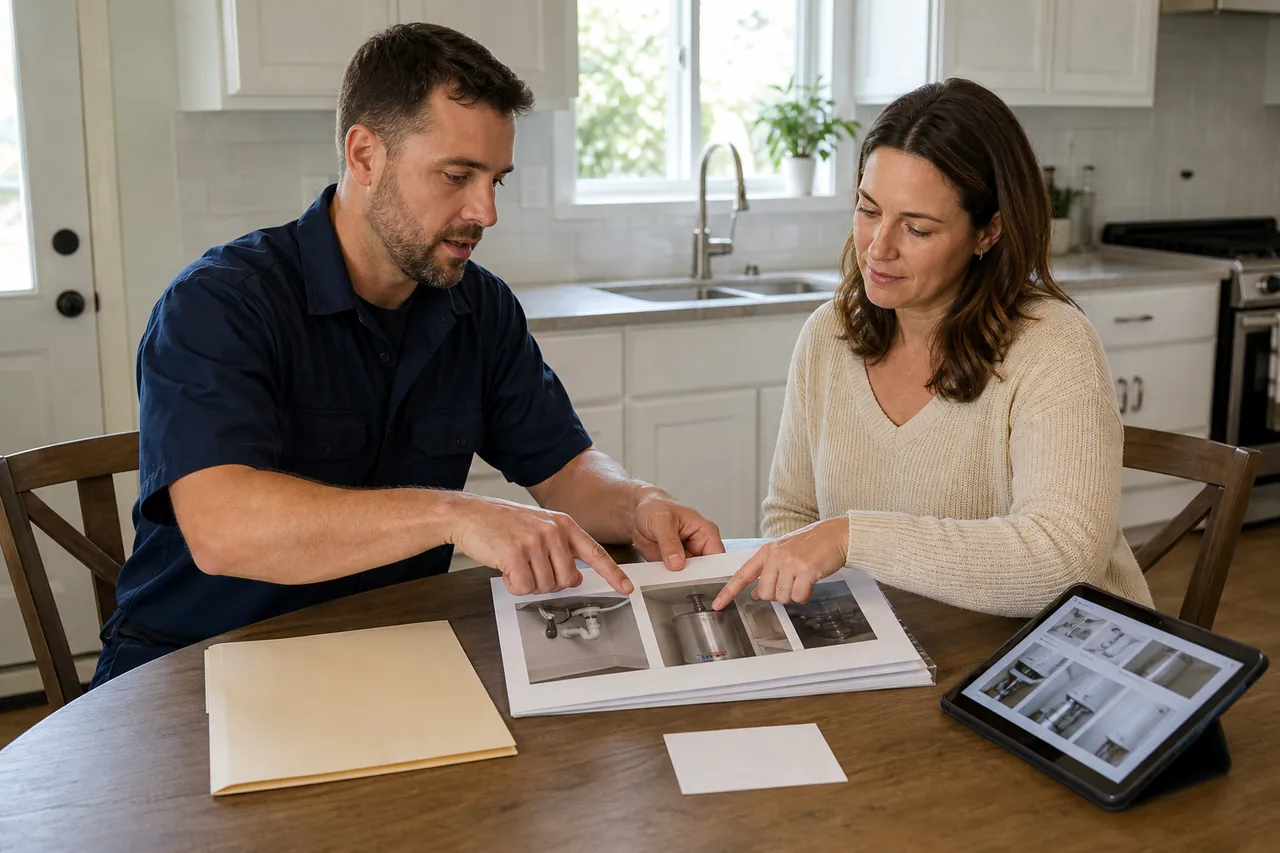
Collect model information, manuals, and owner-facing instructions for installed fixtures, water-heating equipment, pumps, treatment components, or controls. Label each item by room or service area. Photograph accessible model labels and the finished installation from a safe position without opening service covers.
If concealed piping was installed, retain the route information or progress photographs supplied during the project. Label viewpoints carefully so a future owner or contractor can understand which wall, floor, or ceiling is shown. Do not describe it as a complete map when parts of the route were not documented.
Review Operation and Owner Care
Ask the plumber to explain ordinary fixture use, controls, accessible shutoffs identified for the household, and appropriate observations after completion. Clarify which care tasks are safe for the owner and which require professional service. Do not operate unfamiliar valves or alter controls merely to demonstrate that you understood.
Confirm the condition of affected rooms and fixtures at handoff. Note whether water service, drainage, appliance connections, and owner-facing controls were checked within the project scope. If an observation period or follow-up is appropriate, record what should be watched, for how long, and whom to contact.
Close Out Access and Restoration
Compare completed openings, patches, caulk, cabinets, floors, walls, and cleanup with the written allocation of responsibilities. Some finish work may belong to another provider or remain scheduled for later. Record that status accurately rather than treating unfinished restoration as completed plumbing work or vice versa.
Before the provider leaves, walk through the accessible completed areas and compare them with your written question list. Ask for clarification while the installation and testing sequence is still fresh. Record answers in the file instead of relying on a household member to remember a technical explanation later.
Make a brief list of unanswered questions and assign each one a responsible person. An open item should include a next step rather than disappearing among completion documents.
Store the handoff digitally and in a concise property file. Include before-and-after photos, final scope, changes, product information, service guidance, and open items. A structured handoff protects the value of the work because another person can see what happened without reconstructing the project from scattered messages.