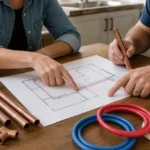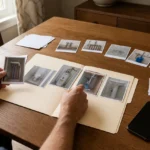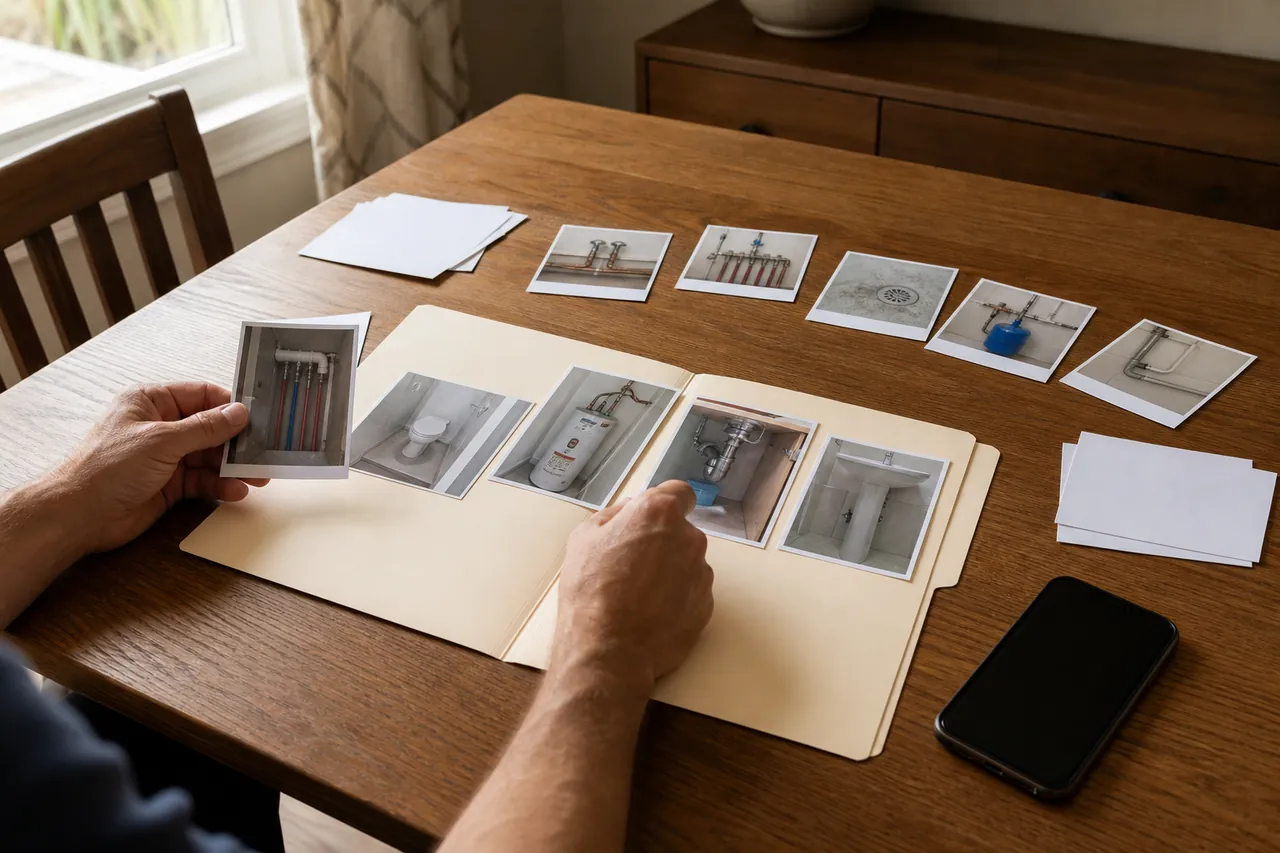
A home plumbing record gives future service providers a reliable picture of fixtures, equipment, known shutoffs, past work, and recurring concerns. Without one, useful details are often split among phone photos, old invoices, appliance manuals, and memories that become less certain over time. The record does not need to map concealed piping or include technical conclusions. It needs consistent names, dates, locations, and documents.
Create a Property Plumbing Index
Begin with a room-by-room list of sinks, toilets, tubs, showers, laundry connections, exterior fixtures, and other plumbing the household uses. Add water-heating equipment, pumps, treatment equipment, and visible service components. Give each item a durable name such as “upstairs hall bathroom toilet” rather than a nickname only one person understands.
For equipment and fixtures with accessible labels, record manufacturer and model information from a safe position. Include a wider photo that identifies the item and a close label image. Do not remove covers or crawl into restricted areas to complete the index. Mark information as unknown when it cannot be observed safely.
Document Known Controls and Access
Record the locations of owner-facing shutoffs or controls that a plumber has identified, but do not operate unfamiliar or corroded valves as a documentation exercise. Photograph normal access routes and note keys, gates, cabinets, or building coordination that may matter during a future visit.
Keep emergency contact and property-management information with the index where appropriate, while storing sensitive account details securely elsewhere. A household record should help someone describe the property quickly without exposing passwords, access codes, or personal data unnecessarily.
Add Work History and Symptoms
For each repair or installation, save the date, provider document, accepted scope, product information, approved changes, and completion notes. Match the record to the exact room or equipment entry. Preserve older information when a fixture is replaced, but mark it as retired so no one mistakes it for the current installation.
Recurring symptoms deserve their own timeline. Note the location, ordinary use, frequency, visible condition, and any relationship with other fixtures. Keep observations distinct from diagnoses. This history can show whether a concern is new, repeated, or connected in time with earlier work.
Maintain the File in Two Useful Forms
Store digital records in folders that follow the same room and equipment names as a paper summary. Back up the digital copy in an appropriate secure location. A one-page index can point to detailed invoices and photos without making the main record difficult to scan.
Protect privacy when saving invoices and photographs. Remove payment details or personal correspondence from the shareable service copy, and keep account credentials outside the property index. The practical record should contain the plumbing facts a provider needs without exposing unrelated household information.
Update the file after plumbing service, renovations, appliance changes, or a newly identified access point. Ask another household member to review it for clarity. A useful home plumbing record can be understood by someone who was not present for the original work. It supports faster, more accurate conversations while leaving concealed routing, system condition, and repair decisions to direct professional evaluation.