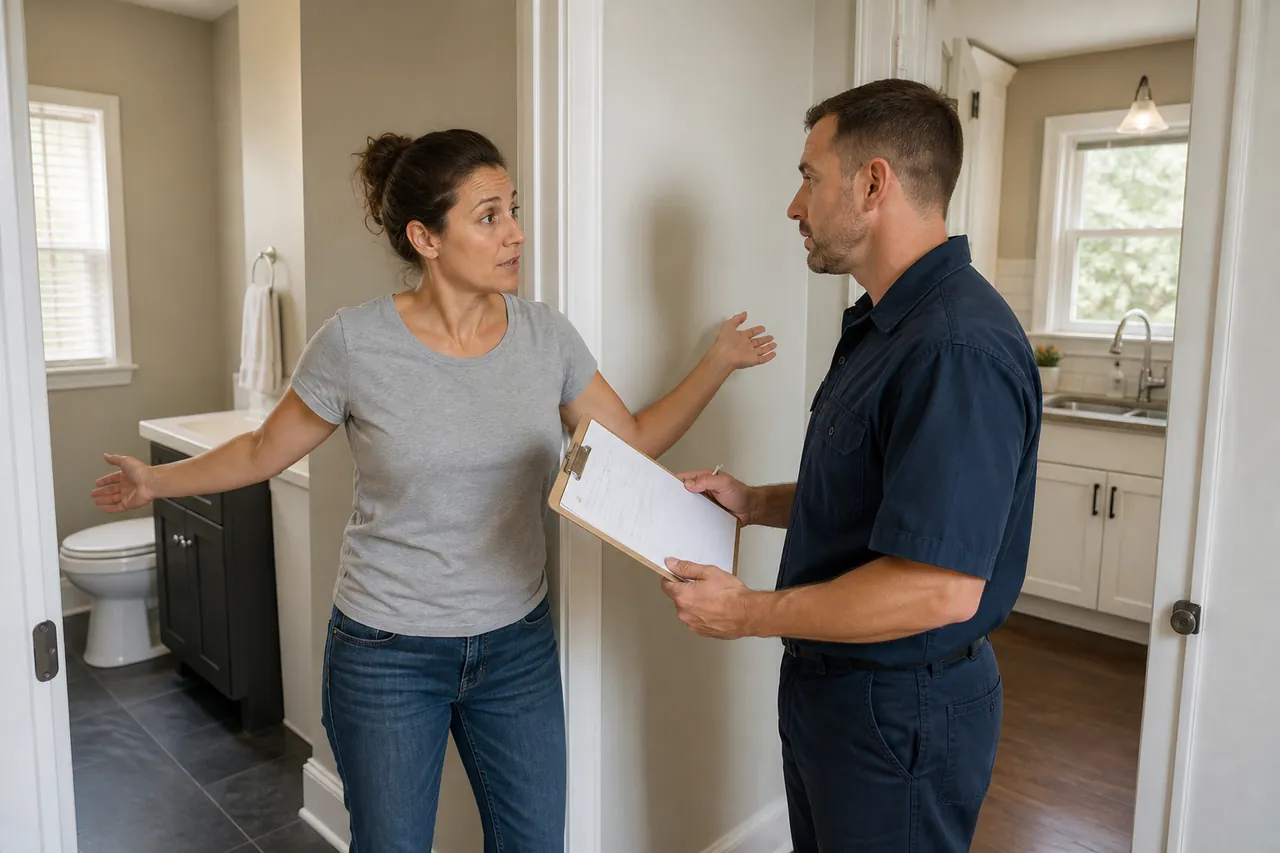
One slow drain may point to a condition near that fixture, but several slow drains can indicate a broader relationship that deserves attention. The key is not to diagnose the piping layout from the symptoms. It is to identify which fixtures are affected, when their behavior changed, and whether use at one location influences another.
Map Every Affected Fixture
List sinks, tubs, showers, toilets, floor drains, laundry drains, and other connected fixtures by room and floor. Record which one changed first and whether others followed gradually or at the same time. Note whether each fixture is consistently slow or only changes during certain household activities.
A simple sketch can show how rooms sit above, below, or beside one another. This does not establish the route of concealed piping, but it gives the plumber a practical location map. Include shared walls, basement or crawlspace access, and exterior cleanout locations only when already known; do not search restricted areas or open plumbing access points.
Observe Interactions During Normal Use
Under ordinary use, notice whether draining a tub produces sound at a nearby sink, whether laundry discharge coincides with a change elsewhere, or whether a toilet bowl level behaves differently. Record date, time, location, and sequence. Do not fill multiple fixtures, create an overflow, or repeatedly flush simply to test a theory.
Odors, bubbles, water appearing at another drain, or sewage backup are important to report. If wastewater is present, keep people and pets away and avoid using the affected plumbing. Do not handle contaminated material or try to gain more evidence before contacting an appropriate professional.
Share Recent Changes and Prior Actions
Tell the plumber about recent construction, appliance installation, plumbing repairs, landscape work, occupancy changes, or unusual household use. Include any recurring history in the same part of the property. These events provide context, but only inspection can determine whether they are related.
List every cleaner, tool, or treatment already used, with the product name and approximate time. Never combine chemical drain products. A technician needs to know what may be in the piping before opening or servicing it, and a complete account is more valuable than an attempt to make the symptom disappear before the visit.
Ask How the System Will Be Evaluated
Ask which fixtures and accessible piping will be considered, what additional access may be needed, and how findings will distinguish a local fixture concern from a wider drainage issue. If cameras, cleanouts, or opening work are proposed, request a clear explanation of purpose, limits, protection, and restoration responsibilities.
For rental or shared properties, include maintenance notices and earlier service records available to the household. State which piping or common areas are controlled by the building. This helps the service conversation respect property boundaries while keeping the symptom map tied to your own fixtures.
Several slow drains matter because their shared timing and location may change the appropriate starting point. A room-by-room record helps the plumber evaluate the drainage system efficiently while avoiding assumptions about concealed routing. Preserve that record with the service findings so future changes can be compared with a reliable baseline.